Customers’ expectations when it comes to digital services are increasingly changing. Instead of downloading separate applications for transport, food delivery, shopping, payments, and many other daily needs, many of them would rather have all the services used in one platform.
As a result, multi-service super apps have emerged in the market, giving the opportunity to connect various services into a single digital experience. The model is advantageous not only from the convenience perspective for entrepreneurs.
It creates opportunities to reach customers through multiple services, generate different revenue streams, and build long-term relationships.
What Makes a Multi-Service Super App Different?
In a traditional mobile application, a user can utilize an application designed to perform a specific task, whereas a super app connects several services on a single platform with a single user account, payment, and user interface.
For instance, a customer can perform the following tasks using one application:
- Travel by taxi or another similar means of transport.
- Order food from different restaurants.
- Purchase food and household items from stores.
- Arrange various services in one’s house.
- Pay for services using digital payments.
- Follow delivery and booking information.
The main benefit lies in the fact that customers are able to switch from one service to another without changing applications. Research done on super apps points to the importance of integrated services provided to customers, as well as their common user experience and transactions.
Why the Multi-Service App Business Model Is Attracting Entrepreneurs
The multi-service app business model has become popular due to the creation of various customer service offerings and methods for earning revenue.
The business should not rely only on one service category but create a whole ecosystem of customers’ daily needs.
This way of providing different services brings three benefits:
- More customer touchpoints: Different services increase the reasons for customers to use the app.
- Multiple revenue sources: A business earns money through commissions, delivery fees, subscription fees, and advertising
- Cross-service and cross-selling opportunities: A customer using one category of the service may later use another one.
Nevertheless, each of the new services has to be sufficiently researched in terms of demand, the availability of the provider, and operational planning.
Super App Business Opportunities Across Different Industries
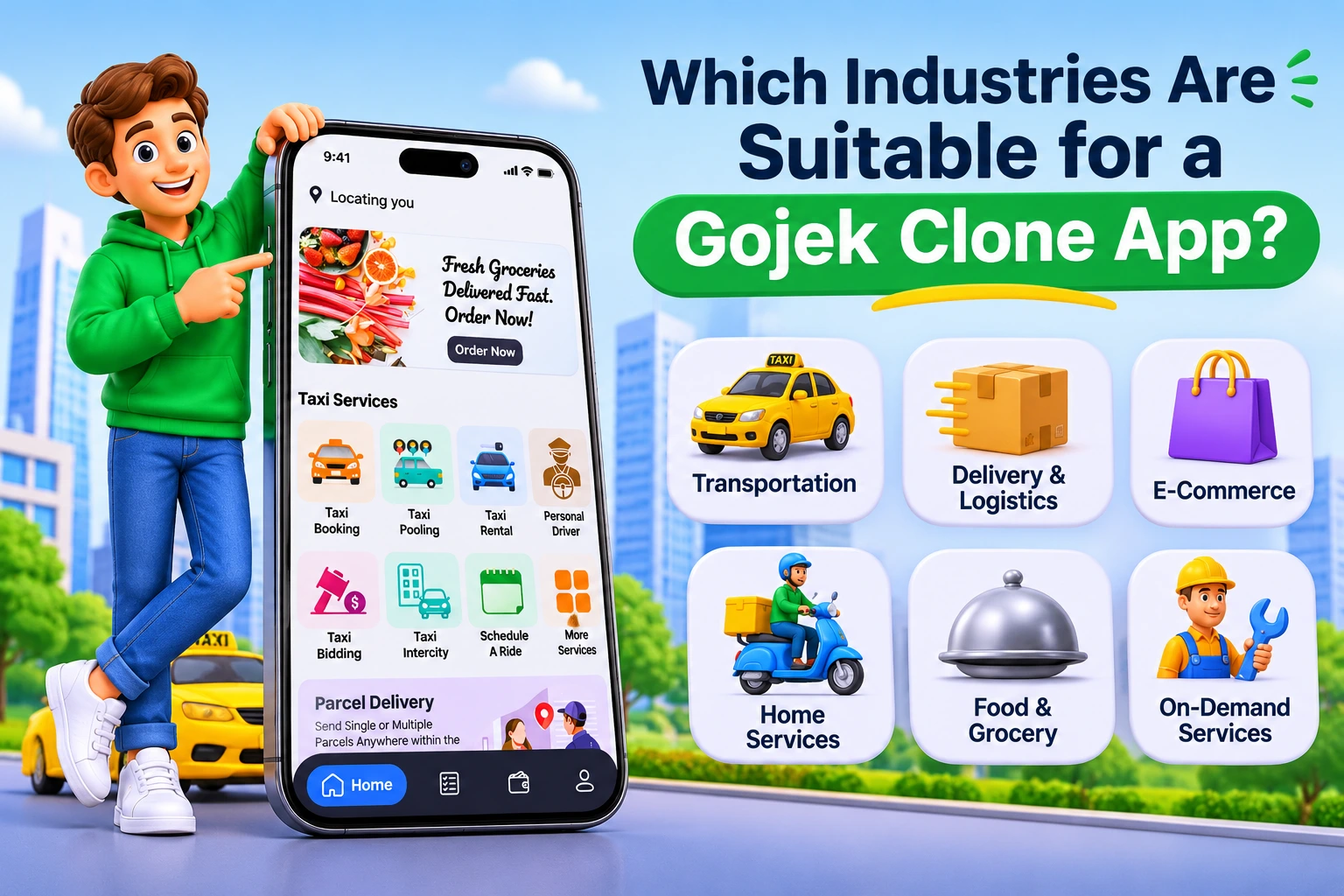
The model applies to numerous industries, such as transportation and food delivery, which should consider various service options depending on their customers and the local market where they operate.
Transport
Taxi booking, bike rides, renting vehicles, and public transport services are the starting point of the platform.
Food & grocery delivery
Restaurant deliveries, buying grocery, and express delivery services provide the repeat customers interactions.
Home services
The application can be used not only for shopping and traveling but also for cleaning, plumbing, maintenance, beauty, and anything else related to local bookings.
Shopping and local commerce
The platform makes it possible for local merchants and merchants to display their products, receive orders, and interact with the local clientele.
Such super app business opportunities help businesses grow over time. Certain categories will be particularly good for businesses depending on how much demand is anticipated by customers, if partners are available, and whether they have enough staff to ensure smooth operations of every service.
Super App Market Growth: Why the Timing Matters
The rising interest in integrating digital platforms is a sign of changes in customer expectations. More and more individuals use mobile applications for their daily activities, and businesses are trying to find ways to integrate their services into a unified customer experience.
An industry review published by Adjust in January 2026 suggests that super apps have gained ground in different regions of the app market. The same document mentions the convenience that comes from decreased app switching as well as the availability of connected services as the key drivers for the adoption of super apps.
One of the trends being developed within the super app market growth is encouraging other businesses outside of Asia to consider different business models, but it is worth reminding that this opportunity does not ensure success. Local competition, digital payment adoption, customer trust, and regulatory requirements remain important.
How an All-in-One Service App Generates Revenue
There are also plenty of income sources that an all-in-one service application can use, unlike traditional methods that rely on one source.
| Revenue stream | How it works |
| Commissions from services | Earn a percentage based on bookings made or services provided |
| Delivery costs | Customers will pay for deliveries made to them |
| Subscription plans | Sell various subscriptions to members depending on the benefits they include |
| Promoted listings | Service providers pay for putting themselves on top of others in their categories |
| Corporate partnership | Make money from contracts with businesses |
The way businesses make money must correspond to the type of service being offered. For example, transportation services would make profits from ride-hailing, while food delivery would have earnings both from restaurant commissions and delivery charges.
Why a Connected Multi-Service Platform Can Build Customer Loyalty
Retaining existing customers is one of the main reasons for business adoption of integrated platforms.
The more the application is used by customers in their everyday needs, the better the opportunities are to remain relevant. A customer who has booked a taxi may also use the same account to order groceries or other services later on.
A well-designed multi-service platform can support this experience through:
- One customer account across services.
- Consistent procedures for payment and notification workflows.
- Centralization of booking and order information.
- Loyalty programs covering all relevant categories.
- Proper offers for customers depending on their activity.
- Efficient support for service types offered.
Sharing of data between different services is beneficial for the user, but businesses need to act responsibly in regard to customers’ data and stick to the privacy regulations.
Essential Components Behind Building a Successful Super App
More than multiple booking screens are required for a super app. Its different services should cooperate with each other through an effective technical infrastructure.
The main components are:
- Application for customers: Enables users to explore the available services, to place orders, to pay for products, and to monitor the progress of their requests.
- Application for service providers: Provides drivers, merchants, and specialists with tools to process orders and analyze profit.
- Admin interface: Allows business management to control types of services, user groups, commissions, and transactions.
- Payment system: Provides secure transactions within the available service categories.
- Location services: Allow defining addresses as well as getting information about available services depending on the current location.
Successful super app development requires good infrastructure, an effective security system, regular maintenance, and integration planning as well. It is better not to add unnecessary functions before ensuring the reliable work of the main solution.
How V3Cube Helps Businesses Launch a Multi-Service App
Creating a full-fledged platform from the ground up could involve independent development of customer apps, service provider interfaces, service management, and payment systems. With the help of pre-built clone app solutions provided by V3Cube, businesses have an opportunity to start with an already existing foundation in a competitive multi-service market.
The best part about such applications is the ability to test the existing program structure instead of developing every single core component independently. Depending on the chosen option, entrepreneurs can try everything from working with the client and service provider interface to installing the service booking system on their own.
V3Cube also enables businesses to have a dialogue concerning customisation of their intended services, branding, business model, operational requirements, etc. This helps those companies that want to start their business with a limited number of services and expand it gradually according to market needs.
Compared to completely custom-built software, launching a ready-made foundation requires much less time for development. However, businesses must make sure to check all modules and source code, as well as licensing terms and conditions, payment gateway integrations, customisation costs, and ongoing support through the product demo.
Conclusion
Multi-service super apps are becoming popular with businesses because they meet day-to-day customer expectations, enable different revenue streams, and build better relationships with clients. But to succeed, businesses need to choose the correct services, create operational excellence, and scale wisely at a manageable price.
Entrepreneurs with an understanding of the local market who have the right technology can build a platform that provides them with room for growth in the long run. V3Cube offers a starting foundation that businesses can start with while they are developing a successful multi-service ecosystem.
FAQs
Q1. What is a multi-service super app?
This platform is a mobile application that integrates many services, including transportation, food delivery, shopping, and home services.
Q2. Why are super apps becoming popular?
The convenience that it offers lies in the fact that clients can utilize several services from a single app through a unified platform, account, and experience.
Q3. How do multi-service apps make money?
The most common revenue channels are service commissions, delivery fees, subscriptions, advertising, featured listings, and partnerships with businesses.
Q4. Is a multi-service app suitable for startups?
Yes. Startups can start with a handful of services in areas with high local demand and scale up once they develop their customer base and service provider networks.