There are over 7 billion smartphone users worldwide as of early 2026, and this figure will almost certainly rise to 8 billion by 2028.
It does not take a big survey to verify that a high percentage of people now use their smartphones for common daily tasks. (although there are several surveys that verify this claim).
Hence, for a start-up with a business plan to develop a services app, it is already an uphill task since there are already scores of companies offering similar services. Developing a multi-purpose app can help boost their chances of success.
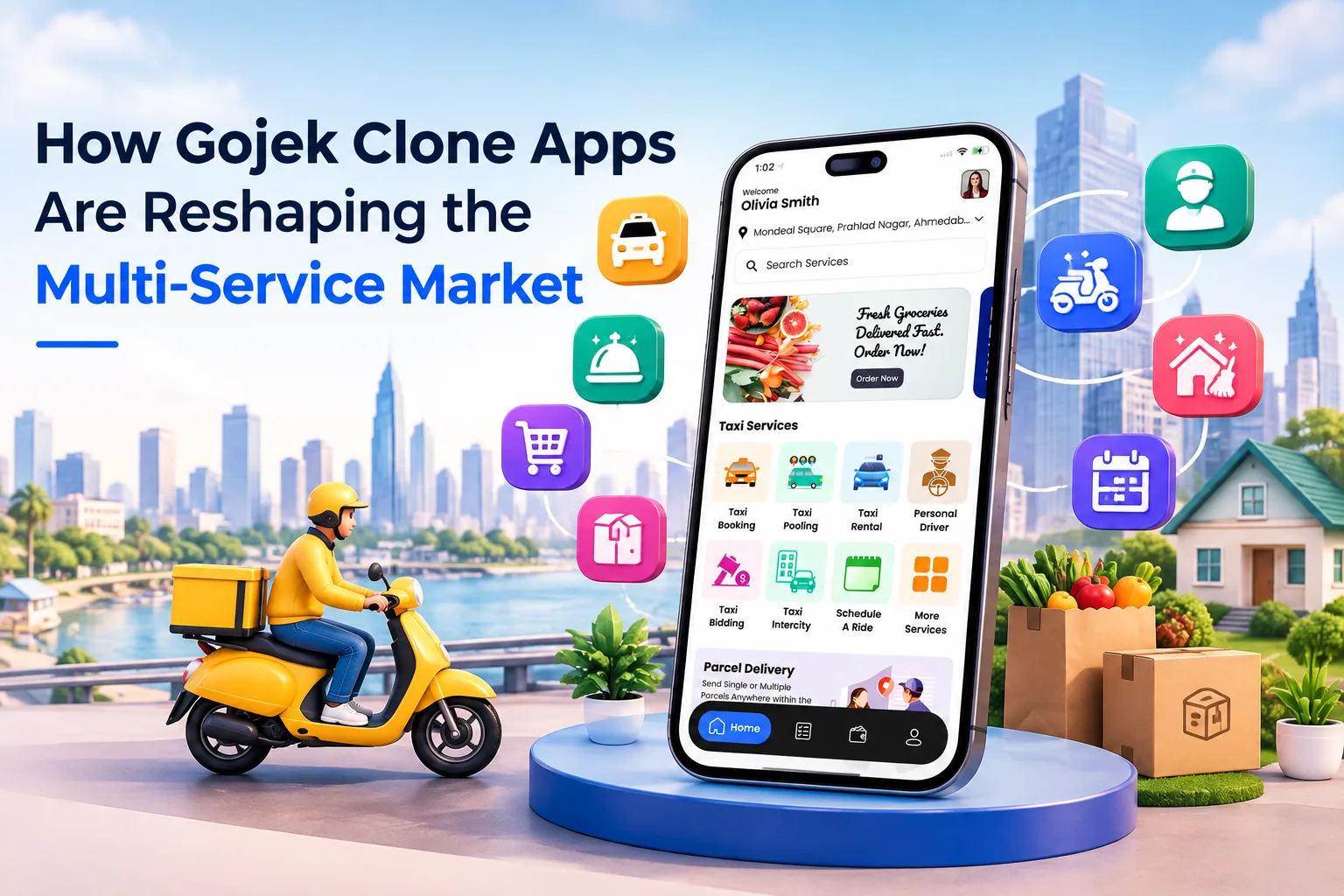
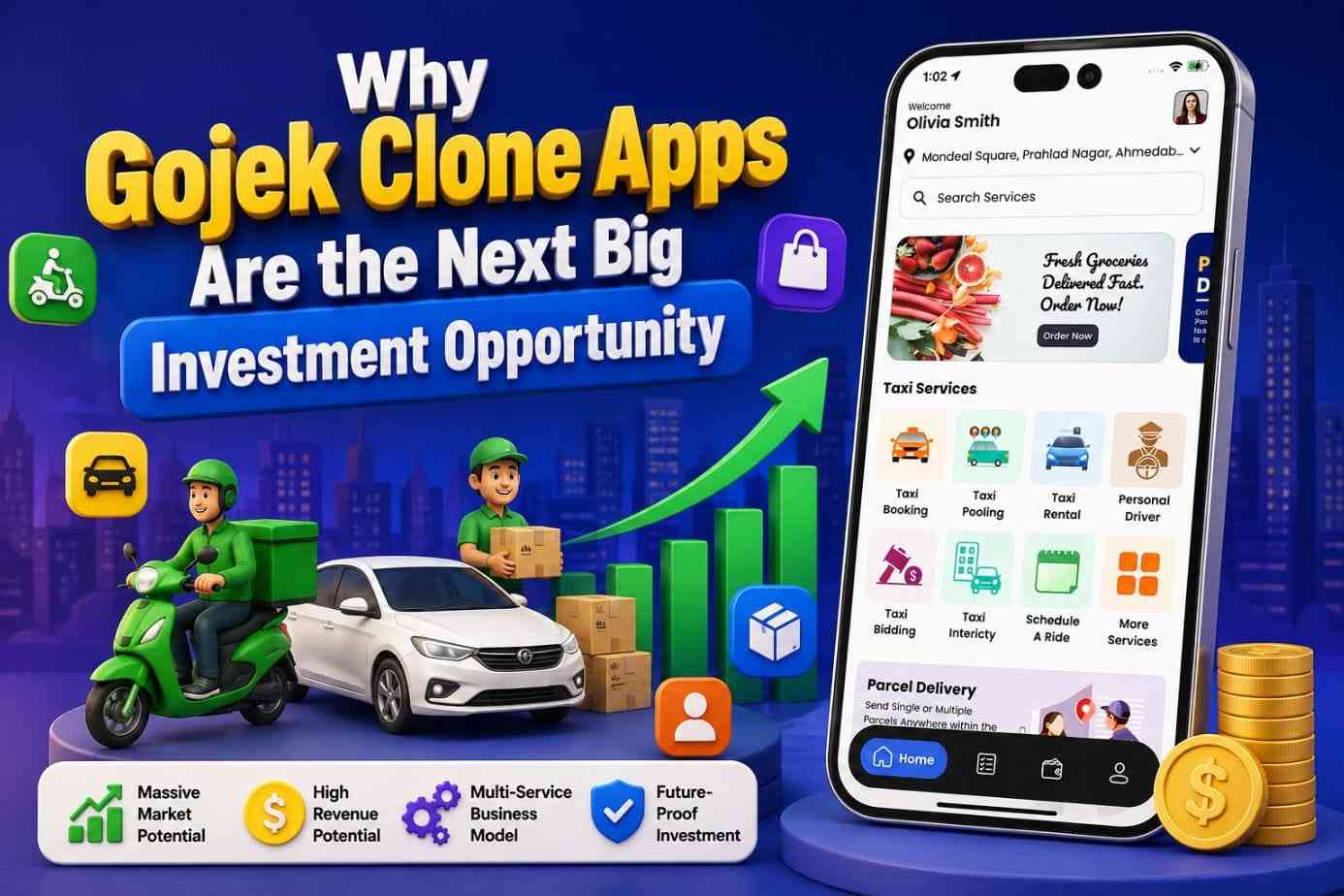
Modern entrepreneurs also now believe in building ecosystems that offer multiple services. The Gojek app is the perfect example of a multi-service app. A Gojek clone is essentially a “Super App” offering various on-demand services.
To put it simply, the Gojek clone app is the Swiss army knife of apps, offering a comprehensive digital marketplace for start-ups. This article elaborates on why start-ups prefer to invest in Gojek clone multi-service apps.
The Multi-Service Platform’s Winning Edge
The popularity of multi-service apps is on the rise. Such apps fit perfectly with the rapidly evolving consumer behavior. In a world where smartphone users use their devices to hail a cab, order food, book a doctor’s appointment, or home service, having to download multiple apps for each task is time-consuming.
What if they had the option to use a single app for over 100 tasks? Every mobile device user would prefer this to managing accounts on 10-15 different apps.
A super app that does it all is more convenient. They also ensure high retention, faster engagement, high lifetime value, and brand value. This is a proven solution that ensures less churn and more spending. Apps like Gojek, WeChat, and Grab are excellent examples of such apps.
The global super app market is projected to surpass $722 billion by 2032 (Allied Market Research). User retention on super apps is 2–3x higher than single-service apps. Investors know this, so do smart founders. In the battle for the customer’s home screen, super apps win by default.
Core Revenue Streams a Gojek Clone Unlocks for Start-ups
A Gojek clone generates revenue through commissions on each service booking, surge pricing, subscription plans, in-app advertising, and delivery fees across every vertical simultaneously.
| Revenue Stream | Source |
| Commission per booking | Rides, deliveries, services |
| Subscription/membership | Premium users |
| Surge & peak pricing | High-demand windows |
| In-app advertising | Local businesses |
| Payment gateway margin | Wallet transactions |
Multiple income channels from day one, that’s the start-up advantage nobody talks about enough.
Gojek Clone vs. Single-Service App: Which Wins for Start-ups?
A multi-service app like Gojek has higher revenue potential since a single-service app limits growth to just one vertical. This is something to consider when investing in a Gojek Clone. The table below provides more details:
| Feature/Metric | Gojek Clone | Single-Service App |
| Market Reach | High | Limited |
| Customer Engagement | Multi-vertical | Single vertical |
| Revenue Potential | Diversified | Single stream |
| Time-to-Market | Time-to-Market | Long build time |
| Operational Complexity | Moderate | Low |
| User Retention | Higher | Lower |
Single-service apps like a taxi app are simpler to manage; on the other hand, a multi-service app is more sustainable and ensures higher growth. The changes in retention increase drastically since a user might not need a taxi daily, hence will need to use an app offering a single taxi service quite occasionally.
There is also the chance that they have multiple taxi booking apps. But this is not the case with a multi-service app. Users tend to require on-demand services daily, such as a taxi, ordering food, a plumber, a doctor, and so on, making the app more relevant daily.
Why Start-ups Invest in Gojek Clone Apps
Multiple Revenue Streams
If ride-hailing slows during the monsoon season, food delivery picks up. That’s the built-in hedge; a multi-service platform gives you no single vertical failure that sinks the ship. Single-service start-ups live and die by one revenue line. Multi-service founders sleep better.
Lower CAC & Higher LTV
You acquire a user once and monetize them across rides, groceries, and services, dramatically lowering CAC while multiplying LTV per user over time. Acquiring one customer for $8 and generating $40/month across five services beats spending $8 to generate $9 from a single taxi booking. The math is ruthless, and it favors super apps.
“Data is the new oil.” – Clive Humby
Smart Cross-Selling Opportunities
A multi-services app benefits from data generated across all the services, thus improving the cross-selling opportunities. Multi-services implement AI-Powered algorithms for smart operations that require predictions and analysis.
For example, if a user books a ride at 7:30 PM, it is highly likely they will require a restaurant delivery service at 8 PM. The app can proactively offer such a service, thus increasing sales. The same applies to customer behaviour patterns.
Operational Efficiency Through Shared Infrastructure
One driver network, one wallet system, one support team, one admin panel serving ten services. Shared infrastructure cuts operational overhead by up to 40% compared to running parallel single-service apps.
This is where white-label Gojek clone solutions like V3Cube’s platform shine, with pre-built shared infrastructure, ready on day one.
Rapid Market Entry with Proven Product-Market Fit
The multi-services app is already widely accepted and approved by consumers across Southeast Asia, India, and several emerging markets. Hence, this is one business model that does not need validating. It is simply a question of localizing and executing.
Scalability and Modularity for Multiple Verticals
One of the biggest issues start-ups tend to face is the ability to scale their operations. This is not the case with a multi-services app like Gojek. It gives businesses the option to start with one or two services and expand to 10 and over 100 as and when their firm can handle it.
How Much Does It Cost to Launch a Gojek Clone App?
The cost to develop a custom multi-service app ranges from $150,000–$500,000. On the other hand, if you opt for a while-label Gojek clone solution, it will cost a fraction of the amount.
Besides costing a lot less, unlike a custom app, it does not take 15 to 18 months to develop. Instead, it can be available to use within 2 weeks. For example, the cost of a ready start-up super app solution from V3Cube will not burn a hole in your pocket and is ready to launch within 2 weeks.
Is a Gojek Clone Right for Your Start-up?
Investing in a Gojek Clone is ideal for your start-up if you have local operational capacity. It would help to verify that the market you are targeting is an underserved multi-service market.
An easy answer to this question is to take the self-assessment below: if you answer yes to at least 3 of the following questions, then you can be sure that a start-up Gojek clone app is right for you.
Ask yourself:
· Verify whether or not the relevant market is being underserved, typically by fragmented single-service apps.
· Does your start-up have access to the local service provider network?
· Are you willing to invest in the local market and operations?
· Is launching fast the chosen strategy of your start-up?
The multi-service app market already has a proven playbook. Why risk the success of your business by opting for a custom solution?
V3Cube offers a white-label Gojek clone solution that is ideal for businesses, especially start-ups. Trust a firm that has already delivered over 1500 apps globally with advanced AI features. Order your Gojek clone app today.
FAQ
1. What is a Gojek strategy?
The Gojek strategy refers to launching a Gojek clone app for your business that allows you to offer multiple on-demand services.
2. What is a Gojek clone multi-service app?
A Gojek clone app is essentially developing a multi-service app like the existing one, Gojek. This type of app typically offers a wide range of on-demand services like ride-hailing, food delivery, online payments, and more.
3. Why are startups choosing white-label Gojek clone apps?
Start-ups tend to choose these apps since they cost less and are quick to launch.
4. What are the main benefits for users?
Users benefit from a multi-service app like Gojek since they can access a wide range of common services in a single app.
5. How does investing in a Gojek clone reduce start-up risks?
The Gojek clone strategy is a tried and tested business model with a huge market demand. Besides which, the app offers immense opportunity to scale without much effort. These factors help reduce risk making it ideal for a start-up.