In the bustling corridors of São Paulo’s Faria Lima and Florianópolis, a tectonic shift is occurring. Brazil is undergoing a massive structural pivot. The Brazilian Central Bank’s PIX ecosystem is now processing over 42 billion transactions annually.
The digital transformation in 2026 is driven by start-ups and enterprises striving to optimize operations amid rising labor and logistics costs. The primary challenge is beating the rising cost of doing business in Brazil.
The on-demand multi-service apps are a proven strategy to cut expenses while boosting efficiency. Imagine a delivery start-up in São Paulo reducing driver scheduling inefficiencies by 30% overnight, or a healthcare provider automating patient transport and supply management seamlessly.
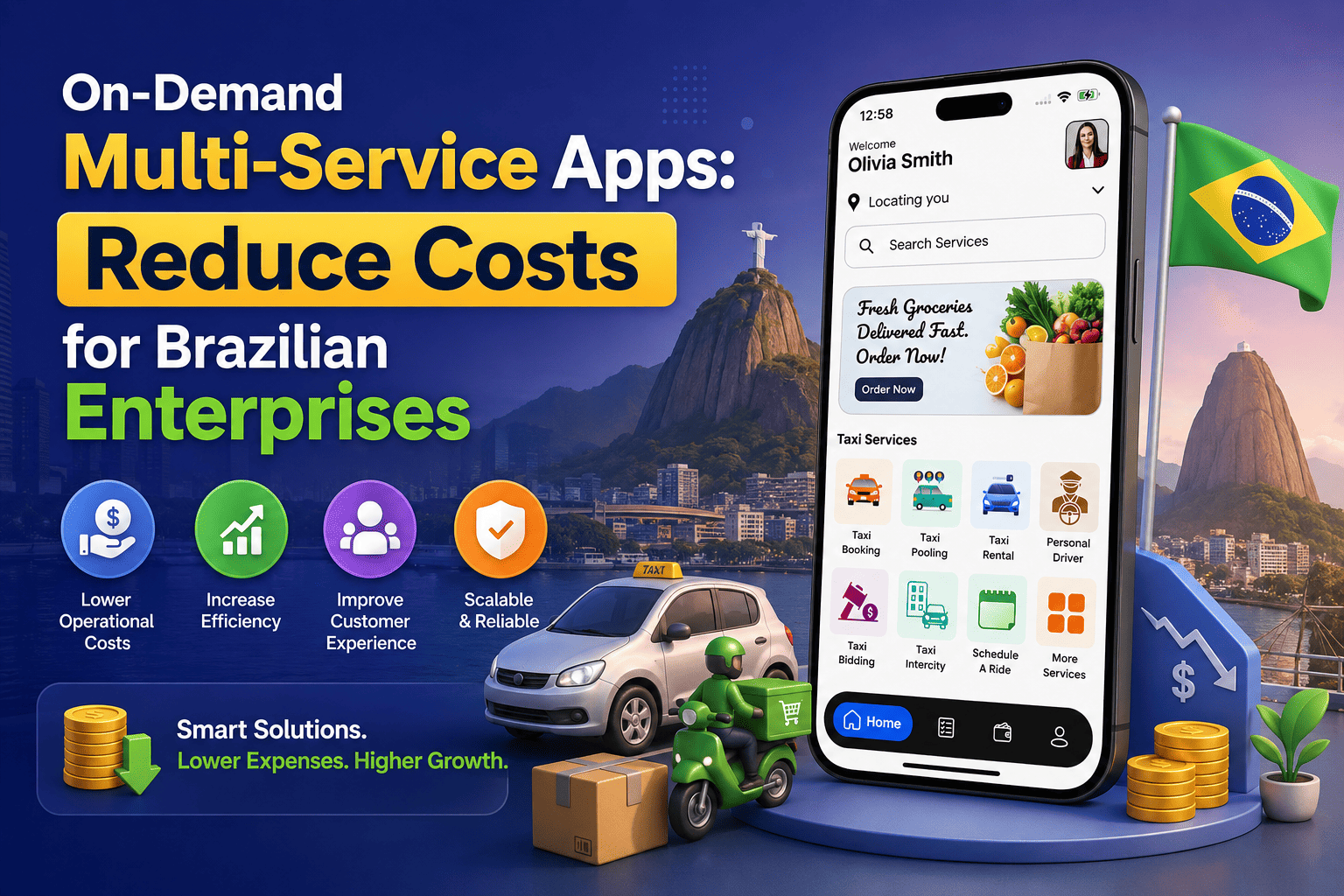
This is now possible with a single multi-service platform. This article further elaborates on how an on-demand multi-service app the Gojek Clone Brazil App can help reduce operational costs for Brazilian Enterprises.
What Is an On-Demand Multi-Service App?
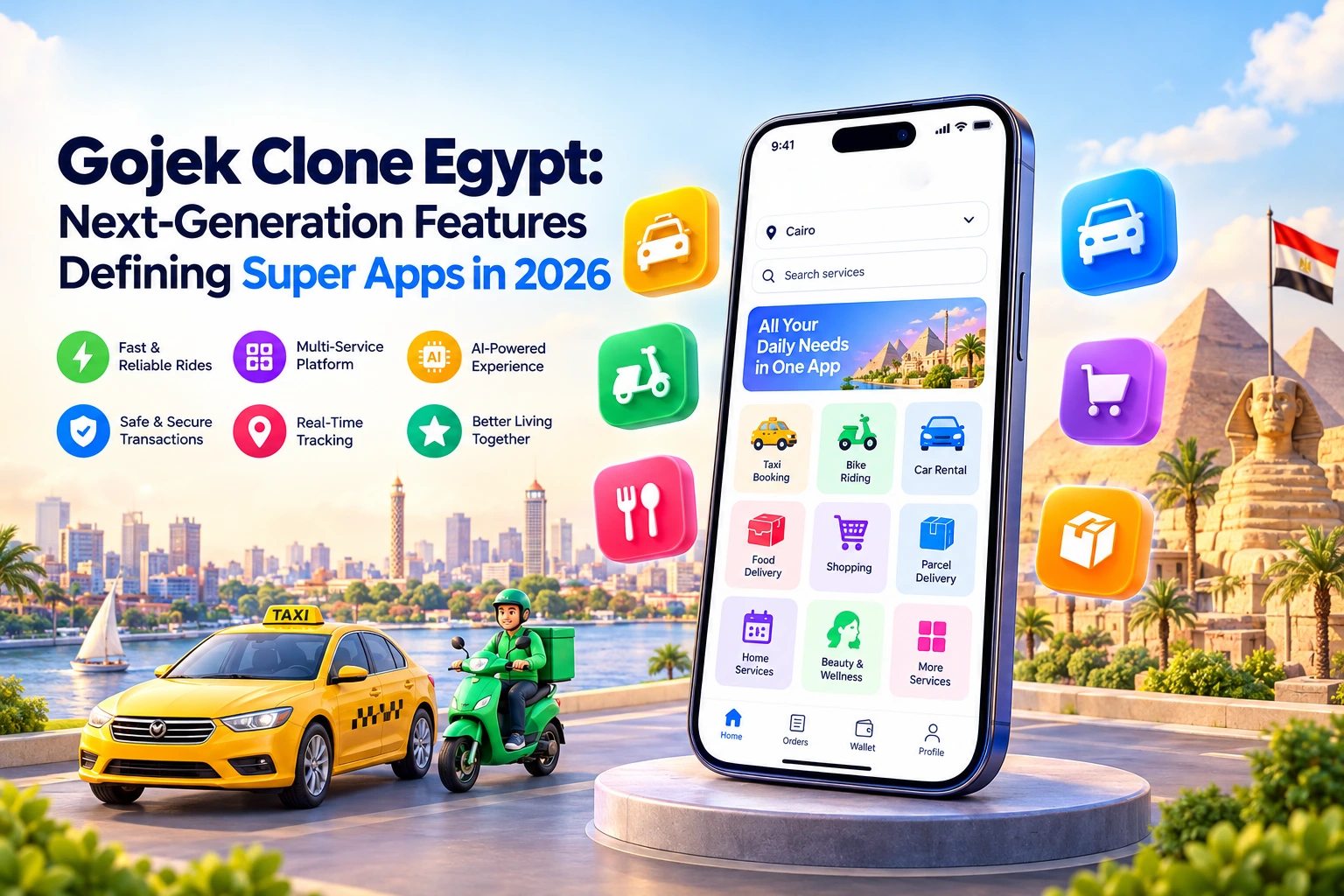
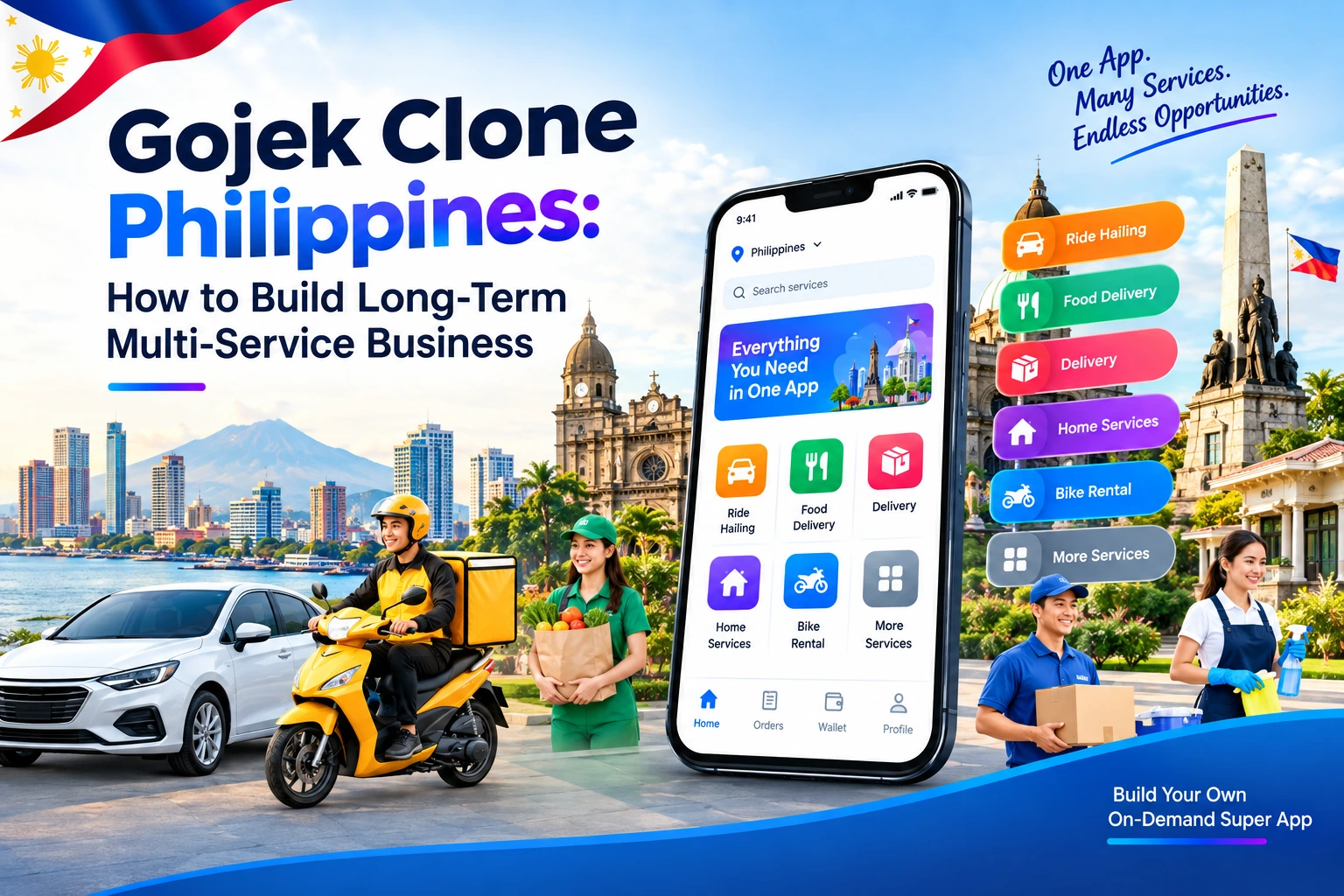
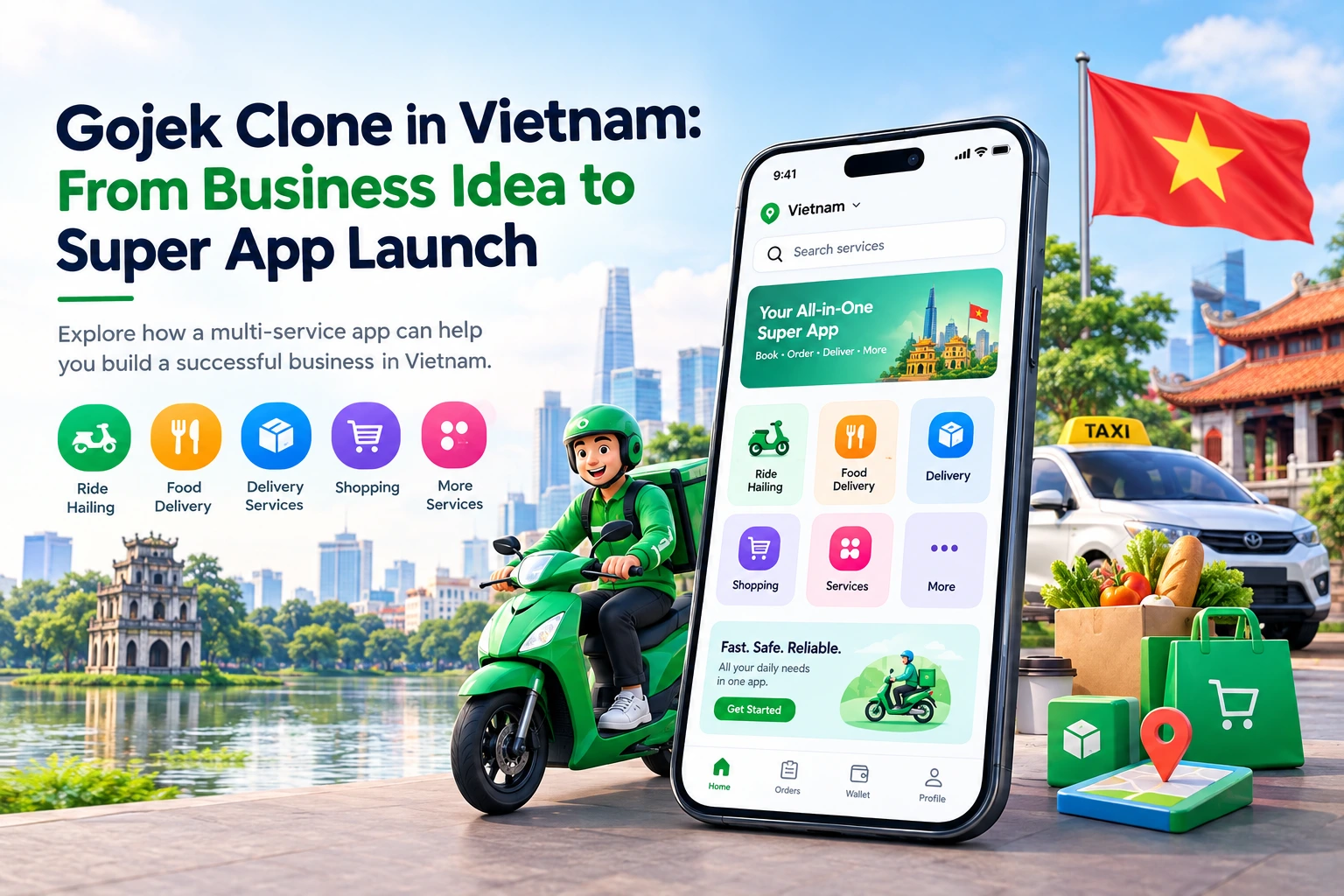
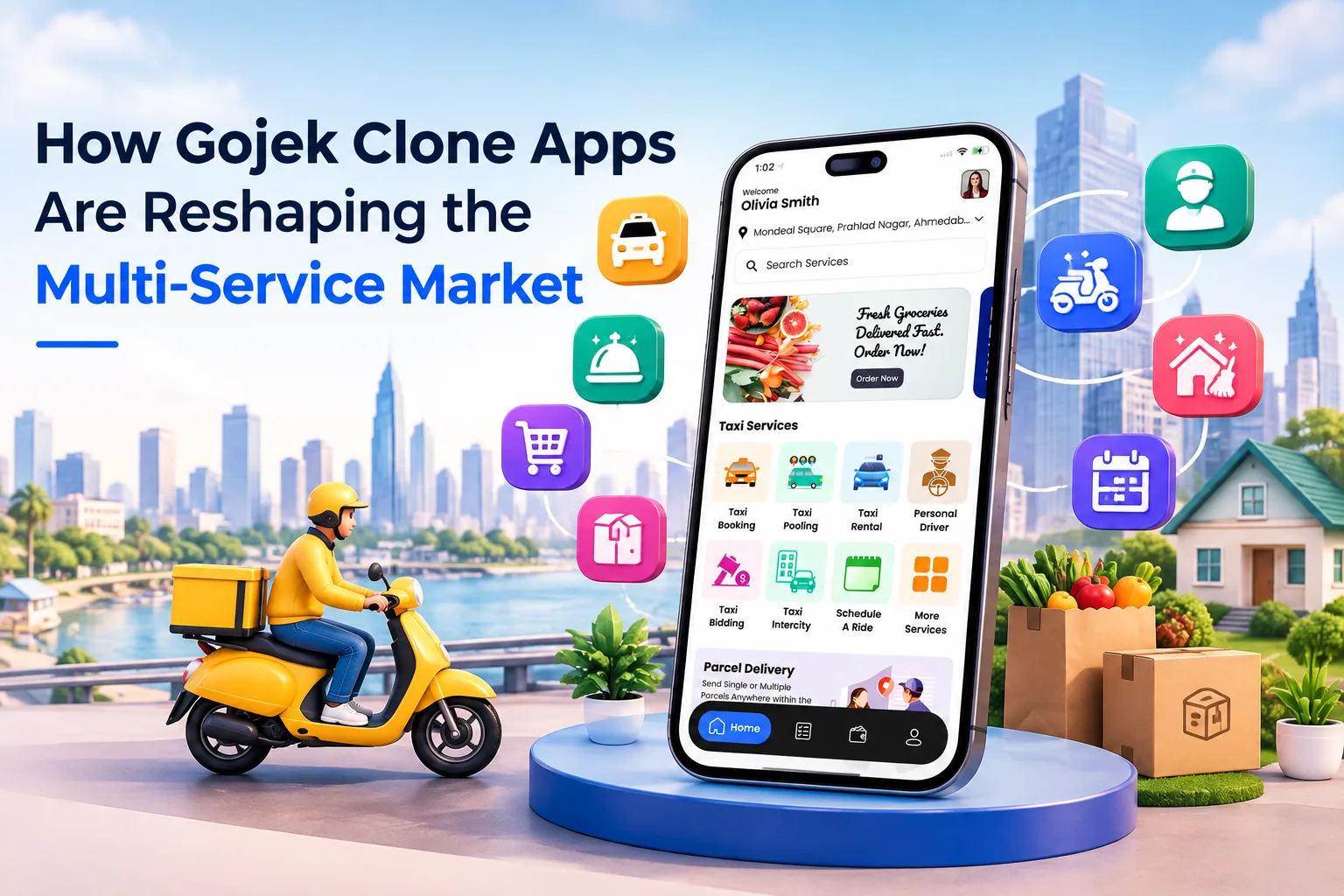
An on-demand multi-service app, also called a Gojek Clone Brazil App, is a single digital platform that aggregates multiple service categories. This includes categories like transportation, delivery, logistics, home services, and payments.
It makes all these services accessible through one unified interface. The multi service app rose to popularity mainly due the Gojek app from Indonesia hence this app is also nicknamed the Gojek clone app. The app consists of several components for customers, service providers, and enterprise administrators.
Unlike point solutions, multi-service platforms share a common tech infrastructure. The Gojek clone app allows users to access all the services with the help of a single account. It also allows the app owner to use a single dashboard to manage all the services and scale as they please.
Why Brazilian Enterprises Are Overpaying Right Now
Brazilian businesses face a structural cost multiplier that most global peers do not:
- Currency depreciation inflates the cost of dollar-denominated SaaS subscriptions
- Fragmented vendor stacks force enterprises to pay separately for ride management, logistics, delivery, and scheduling software.
- Integration overhead consumes IT budgets for maintaining APIs between disconnected platforms.
- Driver/provider duplication across services prevents pooled workforce efficiency.
The real cost of fragmentation isn’t the individual subscriptions; it’s the operational tax paid every single day in inefficiency, data silos, and missed cross-service optimization.
A consolidated multi-service platform eliminates all four cost drivers simultaneously. The obvious question for all enterprises is: how to reduce operational costs with a multi-service app? The following sections provide more insight on this.
How Gojek Clone Brazil Reduces Cost
A multi-services app solves the basic issue of rising operational costs for Brazilian businesses. Here is how it does so:
Unified Infrastructure Eliminates Redundancy
A single platform replaces the many individual apps that one would require for various on-demand verticals. This also means a shared backend and a common dashboard to manage all the user accounts across all verticals. This helps reduce the software expenditure drastically. It also boosts retention since customers use a single account for all services.
Shared Service Provider Pool
In a multi-service model, the same verified driver or provider can fulfil a ride, a delivery, and a logistics task within the same workday. This pooled workforce model optimises provider utilisation rates and dramatically reduces idle capacity costs.
Centralised Analytics and Decision Intelligence
With a single dashboard to track operational details across all service categories, the cost of analysis is reduced. It also allows businesses to leverage AI tools to assess all business verticals and make smarter business decisions.
Lower Customer Acquisition Cost Per Service
When customers use one app for multiple services, cross-sell conversion is organic. Marketing spend per service category drops significantly when a unified loyalty mechanism drives retention across the entire platform. It also provides businesses with a deeper insight into consumer behaviour to optimize and personalize their service.
Reduced IT Maintenance Overhead
Maintaining one integrated platform versus managing multiple vendor integrations reduces internal IT costs substantially. Cloud-based SaaS architecture further eliminates on-premises infrastructure expenditure.
The table below offers a direct comparison between a Gojek clone for Brazilian firms vs. using individual apps for each service.
| Factor | Individual apps | Gojek Clone App |
| Monthly SaaS spend | High (per-tool licensing) | Consolidated (single platform) |
| IT integration cost | Ongoing (API maintenance) | Minimal (built-in) |
| Provider pool efficiency | Low (siloed by service) | High (shared, cross-category) |
| Data visibility | Fragmented (multiple dashboards) | Unified (single admin panel) |
| Scalability | Complex (each tool scales separately) | Simple (modular architecture) |
| Time to deploy the new service | Months | Less than a week |
Is a Multi-Service Platform Right for Your Enterprise?
Before committing to a platform, evaluate your organisation against these five criteria:
- Are you currently running 3+ separate operational apps? A multi-service app will ensure immediate ROI.
- Is your service provider pool underutilised? The service provider’s tasks can be optimized dynamically with a Gojek clone script.
- Do you operate across multiple Brazilian cities or states? The core strength of these super apps is to manage several verticals across several regions.
- Is your IT team spending >20% of time on integration maintenance? Eliminate overheads by consolidating spending on an all-in-one app.
- Are you targeting growth in services beyond your core offering? The on-demand multi-service app is specially designed to help you scale your services and add new verticals seamlessly.
Hence, if you are an enterprise seeking a proven deployable solution without having to burn your wallet on custom Gojek Clone Development, the V3Cube has the perfect solution for you.
We offer an enterprise-grade multi-service platform for the Brazilian market. Our white-label Gojek clone is a production-ready multi-service app infrastructure built for scale.
V3Cube’s solutions are designed for enterprises that cannot afford the risk of multi-year custom development cycles. We deliver launch-ready infrastructure that can be configured, localised, and deployed in weeks, not years.
Order your Gojek Clone App today! You do not need to shell out extra to localize with BRL currency and the Portuguese language. V3Cube offers up to 25 languages and currencies along with English and USD at no extra cost for its Gojek app – XjekPlus.
FAQ
What is an on-demand multi-service app, and how does it reduce operational costs?
An on-demand multi-service app consolidates multiple services transportation, delivery, logistics, home services into a single platform with shared infrastructure. This eliminates redundant software licences, unifies service provider pools, and reduces IT integration overhead, delivering measurable operational cost savings.
How much can Brazilian enterprises save by switching to a multi-service platform?
The exact savings vary by scale, but enterprises typically reduce software vendor expenditure by 30–50%. This is achieved through consolidation, while operational efficiency gains from pooled provider management can reduce per-service fulfilment costs significantly.
What services can be managed on a multi-service super app?
A common admin dashboard is provided to manage all the services. A multi-service app offers various services like parcel delivery, ride-hailing, courier, grocery delivery, and more.
How long does it take to deploy a multi-service app for an enterprise in Brazil?
With a white-label solution like V3Cube’s platform, enterprises can deploy a fully functional multi-service app in Brazil within weeks. This includes custom branding and localised payment integration.
Is a multi-service app suitable for mid-sized Brazilian enterprises or only large corporations?
Multi-service platforms are designed for scalability making them viable for mid-sized enterprises seeking cost efficiency as well as large corporations managing complex multi-city operations.